
MedCare Turkey - MedCare Turkey
Heart Disease in the Womb: Is Early Diagnosis Possible?
Blog

Heart Disease in the Womb: Is Early Diagnosis Possible?

27.10.2026 6 min read Congenital heart diseases in babies can be detecte...
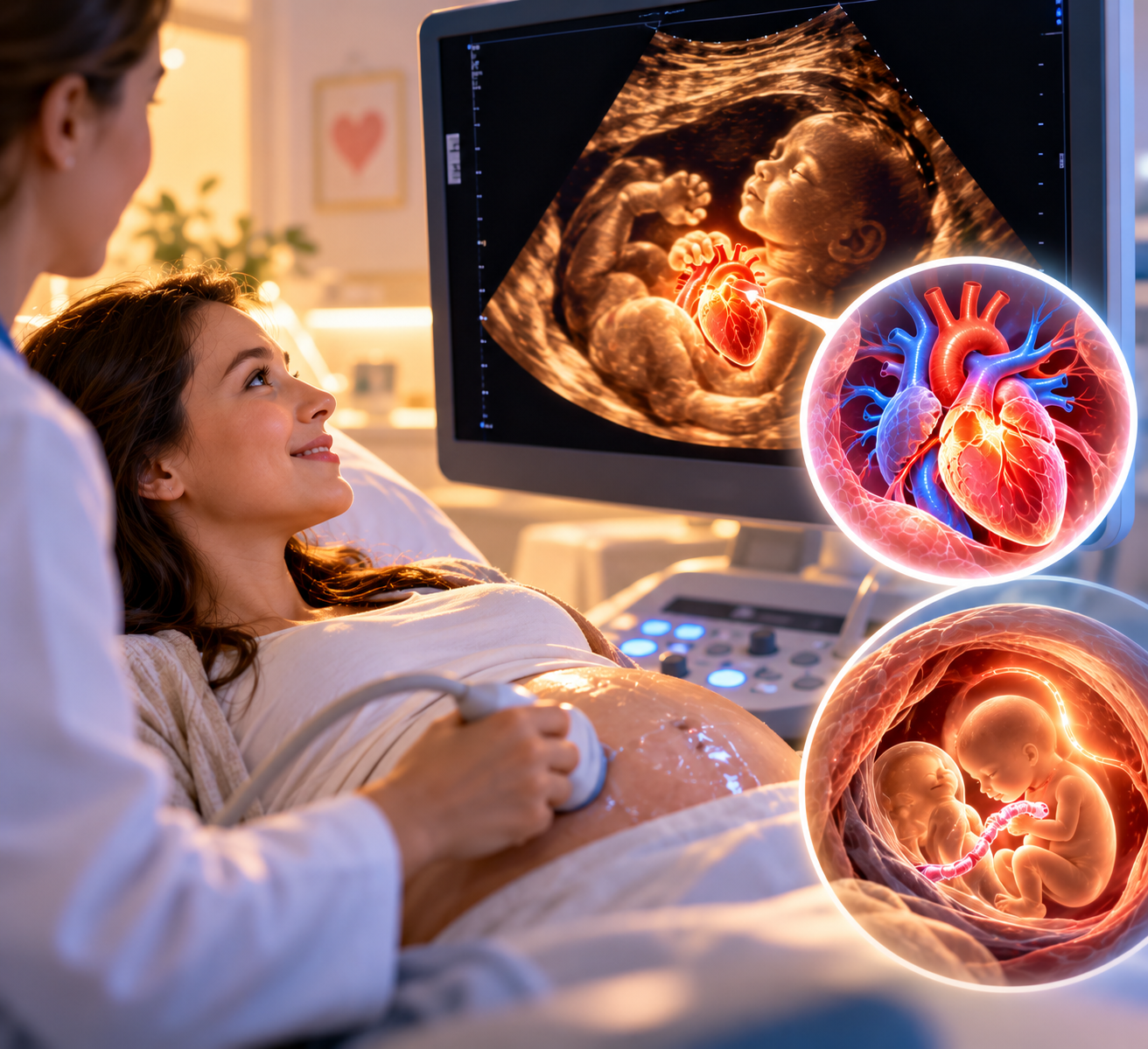
How Are Heart Diseases in Children Diagnosed in the Womb? Congenital heart diseases are structural or functional disorders that arise during the development of the baby's heart in the womb. They can affect the heart's chambers, valves, great vessels or blood circulation. Today, thanks to advanced ultrasound technologies, many congenital heart diseases can be detected before the baby is even born. Early diagnosis in the womb can increase the baby's chance of survival by allowing the necessary interventions after birth to be planned in advance. How Is Heart Disease Detected in the Womb? During the ultrasound examinations performed as part of pregnancy follow-up, the baby's heart structure and rhythm are evaluated. If a structural difference in the heart, a rhythm disorder or an abnormality in blood flow is suspected, a more detailed examination can be performed. The most important method used for this purpose is fetal echocardiography. What Is Fetal Echocardiography? Fetal echocardiography is a special ultrasound method that allows the baby's heart to be examined in detail in the womb. This examination makes it possible to evaluate: - The structure of the heart's four chambers - The development of the heart valves - Great vessels such as the aorta and the pulmonary artery - The direction of blood flow within the heart - The heart rhythm and beat pattern - The heart's contraction function Fetal echocardiography does not involve radiation and is generally considered safe for both mother and baby. In Which Week of Pregnancy Is the Baby's Heart Checked? The baby's heart begins to develop in the early stages of pregnancy. The most commonly preferred period for a detailed assessment of the heart structure is weeks 18–22 of pregnancy. However, in high-risk pregnancies or when suspicious findings are detected early, fetal echocardiography can also be performed earlier. After an early examination, a follow-up check may be needed in later weeks to assess the heart's development. When Is Fetal Echocardiography Recommended? A heart screening with routine ultrasound is important in every pregnancy. Fetal echocardiography, however, may be recommended especially when certain risk factors or suspicious findings are present. These may include: - A family history of congenital heart disease - A heart anomaly in a previous child - Suspicious findings in the heart structure on a pregnancy ultrasound - Detection of a heart rhythm disorder in the baby - Suspicion of certain genetic or chromosomal anomalies - Diabetes in the expectant mother that existed before pregnancy - Exposure to certain medications or infections that may affect the baby's heart Which Heart Diseases Can Be Diagnosed in the Womb? Many important congenital heart diseases can be detected with fetal echocardiography. 1. Ventricular Septal Defect (VSD) An opening in the wall between the heart's two lower chambers. Large defects in particular can be seen during pregnancy, while small openings may be missed. 2. Atrioventricular Septal Defect (AVSD) A congenital anomaly affecting the walls and valves in the central part of the heart. 3. Tetralogy of Fallot A serious congenital heart disease in which four basic abnormalities in the structure of the heart occur together. 4. Transposition of the Great Arteries (TGA) The normal exit points of the aorta and the pulmonary artery are switched. It may require early intervention after birth. 5. Hypoplastic Left Heart Syndrome A serious anomaly that occurs when the structures on the left side of the heart are not sufficiently developed. 6. Truncus Arteriosus A single common vessel leaves the heart instead of two separate great vessels. 7. Coarctation of the Aorta A narrowing in a certain section of the aorta. Although it may be suspected before birth in some cases, a definitive diagnosis may only be made after birth. 8. Heart Rhythm Disorders The baby's heartbeats are faster, slower or more irregular than normal. What Happens If Heart Disease Is Detected? Detecting a heart anomaly in the womb does not always mean that urgent surgery is needed. First, the type and severity of the disease and the baby's general health are evaluated. Then a plan for follow-up during pregnancy and for treatment after birth is created. During this process, specialists in obstetrics and gynecology, perinatology, pediatric cardiology and, when necessary, pediatric cardiac surgery may work together. Can Heart Diseases Be Treated in the Womb? In some fetal heart rhythm disorders, the baby's heart rhythm can be brought under control with medications given to the mother. In certain selected and very specific severe heart anomalies, interventional treatment options in the womb may be considered at experienced centers. However, in most congenital heart diseases, structural correction, if needed, is performed after birth. How Does Early Diagnosis Affect the Delivery Plan? When a serious heart disease is detected, choosing the hospital where the baby will be born is of great importance. Some babies may need special drug treatment, intensive care support, a catheter intervention or heart surgery immediately after birth. Therefore, it may be necessary to plan the delivery at an appropriate center with access to neonatal intensive care, pediatric cardiology and pediatric cardiac surgery services. Early diagnosis makes it possible to be prepared for the critical hours after birth. Does Fetal Echocardiography Show All Heart Diseases? No. Although fetal echocardiography is an advanced diagnostic method, it cannot definitively detect all heart diseases. In particular, very small holes in the heart, some mild valve anomalies and vessel narrowings that become apparent after birth may not be noticed during pregnancy. Therefore, a heart that looks normal before birth does not definitively rule out all congenital heart diseases. What Are the Advantages of Early Diagnosis? Early detection of heart diseases in the womb is important in many ways: - Appropriate specialist follow-up throughout pregnancy - Planning the delivery at the right hospital - Preparation for emergency interventions in the newborn period - Starting necessary treatments without delay - Informing the family about the process after birth - Reducing the risk of complications in some serious heart diseases Conclusion Protecting a baby's heart health sometimes begins with evaluating its first heartbeats in the womb. A significant proportion of congenital heart diseases can be detected early thanks to detailed ultrasound and fetal echocardiography performed during pregnancy. Early diagnosis does not mean that every disease can be treated in the womb. However, it allows the delivery and treatment process to be planned in advance. Remember: Regular check-ups during pregnancy and, when necessary, fetal echocardiography play an important role in assessing the baby's heart health.

Select Language

Get a Quote
Waiting for connection...

Other party has not turned on camera

Waiting for connection...

Connecting to the other party, please wait.

Live Translation Waiting
Start speaking, it will be translated automatically