
Pediatric Heart Surgery in Türkiye: The Right Hospital, Safe Treatment
Pediatric heart surgery in Türkiye offers important options for the treatment of congenital or acquired heart diseases. Experienced surgeons, advanced diagnostic methods and pediatric intensive care services are the key elements of the treatment process. Choosing the right hospital, early diagnosis and personalized treatment planning are of great importance for children's heart health.
Read More
The Importance of a Second Opinion in Pediatric Heart Surgery
The decision for heart surgery in children is an important process that requires careful evaluation and expertise. Getting a second specialist opinion helps confirm the diagnosis, evaluate different treatment options and determine whether surgery is necessary. A second opinion obtained at the right time can help families make more informed and safer decisions for their children.
Read More
Pediatric Heart Surgery: Risks and Advice for Families
Heart surgery in children plays an important role in the treatment of serious congenital or acquired heart diseases. However, as with any surgical procedure, there are risks such as bleeding, infection, rhythm disorders and problems with heart function. Early diagnosis, an experienced surgical team, appropriate intensive care conditions and regular post-operative follow-up are of great importance for the success of the surgery.
Read More
Heart Surgery in Newborns: Treatment and Recovery
Heart surgery in newborn babies is an important surgical method used to treat serious congenital heart diseases. While some babies need intervention immediately after birth, in others medical monitoring and preparation can take place before surgery. Thanks to modern surgical techniques, neonatal intensive care support and the coordination of specialist teams, the aim is to improve the babies' heart function and support their healthy development.
Read More
Heart Disease in the Womb: Is Early Diagnosis Possible?
Congenital heart diseases in babies can be detected in the womb with ultrasound and fetal echocardiography performed during pregnancy. A detailed heart assessment, especially between weeks 18 and 22 of pregnancy, allows many structural heart anomalies to be recognized early. Early diagnosis helps plan the delivery at an appropriate center and start necessary treatments on time.
Read MoreCoronary Artery Anomalies in Children: When Is Surgery Needed?
Coronary artery anomalies are congenital conditions in which the vessels that supply the heart muscle develop in an unusual position or structure. While some anomalies can be monitored without causing symptoms, others can pose serious risks by preventing enough blood from reaching the heart muscle. Chest pain, fainting and shortness of breath during exercise are among the important symptoms. Treatment is planned according to the type of anomaly and its level of risk.
Read MoreTruncus Arteriosus in Children: Early Diagnosis and Surgery
Truncus arteriosus is a serious congenital heart disease in which a single common vessel is present instead of the two great vessels that should leave the heart. This condition, which causes oxygen-rich and oxygen-poor blood to mix, can lead to breathing difficulty, cyanosis and heart failure in babies. Early diagnosis and surgery, usually performed in the first weeks of life, are of critical importance for the baby's health and life.
Read More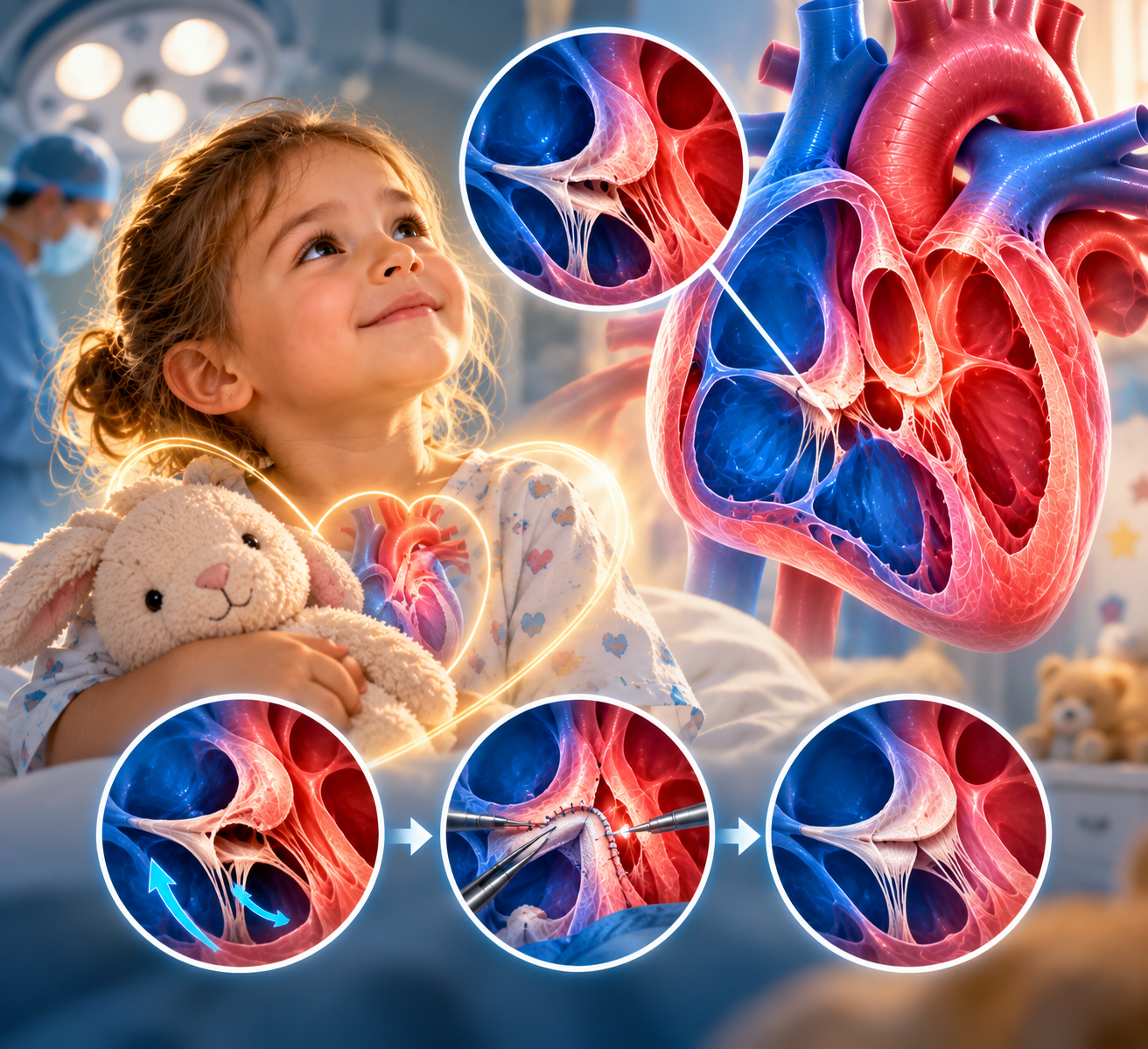
Ebstein Anomaly in Children: Symptoms and Treatment
Ebstein anomaly is a rare heart disease caused by the abnormal congenital development of the tricuspid valve on the right side of the heart. Because the heart valve does not work properly, blood can leak backward and the right side of the heart can become enlarged. Depending on the severity of the disease, regular follow-up, medication, procedures for rhythm disorders or heart surgery may be used.
Read MoreVSD in Children: Surgery and Recovery
Ventricular septal defect (VSD) is a congenital opening between the two lower chambers of the heart. While small holes may close on their own, large openings can place excessive strain on the heart and lungs. When necessary, VSD is closed with surgery, and with appropriate treatment and regular follow-up, this can support children's healthy development.
Read More